


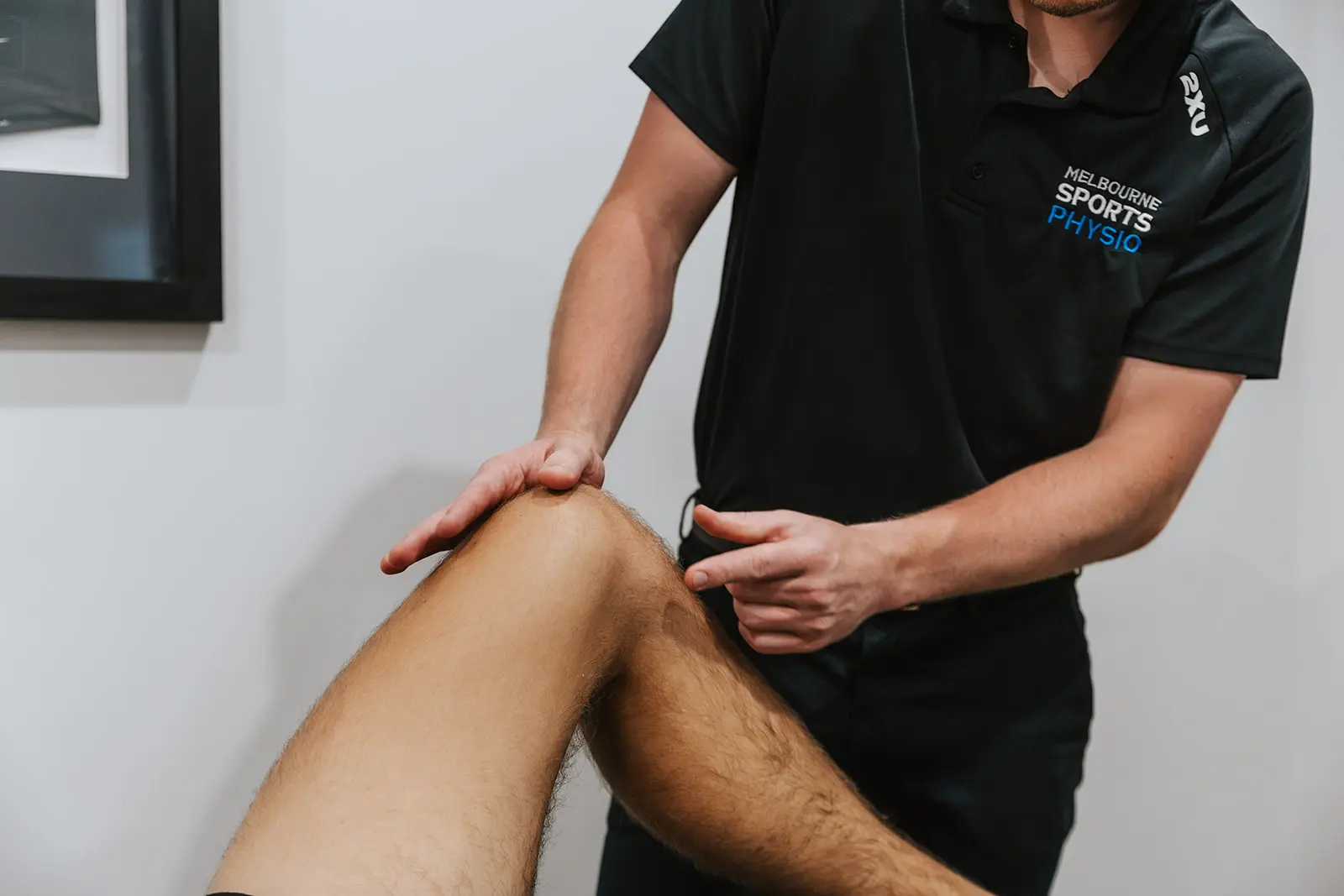
When pain strikes after a game, training session or even a weekend run around the Tan, many people assume the next step is an MRI or an X-ray. It is common for us to hear patients say, “Can you send me for a scan?” before they have even explained what happened.
While imaging certainly has an important place in healthcare, sports physiotherapists are often able to identify the cause of an injury without relying on scans straight away.
In fact, a detailed assessment performed by an experienced sports physio can often provide more useful information than imaging alone, especially given that imaging doesn’t look at movement.
Sports physios diagnose injuries every day using a combination of clinical questioning, movement assessment, strength testing and hands-on examination techniques. Scans are sometimes necessary especially in situations where one’s issue seems unclear, but they are only one piece of the puzzle.
Book Online Now to Fix Your Body
First Step: Listening To The Story
One of the most important parts of diagnosing a sports injury happens before any physical testing begins. Experienced sports physio spend a significant amount of time asking questions about how the injury occurred, what symptoms are present and how the body is behaving.
This process is a discussion of the history of the injury, and it often provides major clues about what structures may be involved.
For example, a footballer who twisted their knee or changing direction and immediately felt instability may present very differently to somebody whose knee developed pain gradually during marathon training.
An experienced sports physio will usually ask questions such as:
-
When did the paint start?
-
Was there a specific incident or did it develop gradually?
-
What movements make it worse?
-
Is there swelling, locking or instability?
-
Have you had previous injuries in the area?
-
What activities are you currently unable to do?
These details help narrow down the likely diagnosis before the physical assessment even begins.
In many cases, the way that the injury occurred points strongly towards certain conditions. A shoulder that dislocated during a tackle behaves differently to shoulder pain caused by repetitive gym training.
Likewise, calf pain during a sudden sprint usually presents differently to an Achilles tendon issue that has gradually gotten worse over several months.
What our clients are saying about us
Why Scans Don’t Always Tell the Full Story. A Sports Physios Perspective.
Many people are surprised to learn that scans frequently show abnormalities even in people who have no pain at all.
Research has consistently found that completely pain-free individuals may still have disc bulges, tendon degeneration, cartilage wear and rotator cuff tears visible on imaging.
In other words, scans may show structural changes that are not actually responsible for someone's symptoms.
This is why sports physios do not treat scans in isolation. A scan result needs to match the person's symptoms and physical examination findings, otherwise there is a risk of focusing on something incidental rather than addressing the true cause of pain.
For example, an MRI might reveal mild lower back degeneration in a recreational runner but it may actually be coming from reduced hip mobility and overloaded glute muscles. Similarly, many active adults in their 40s and 50s have age-related changes visible in their knees despite functioning perfectly well.
If a scan has already been done prior to seeing a sports physio, a thorough clinical assessment helps determine whether the scan findings are clinically relevant or simply incidental.
Movement Assessment Is A Key Part of Diagnosis for Sports Physios in Melbourne
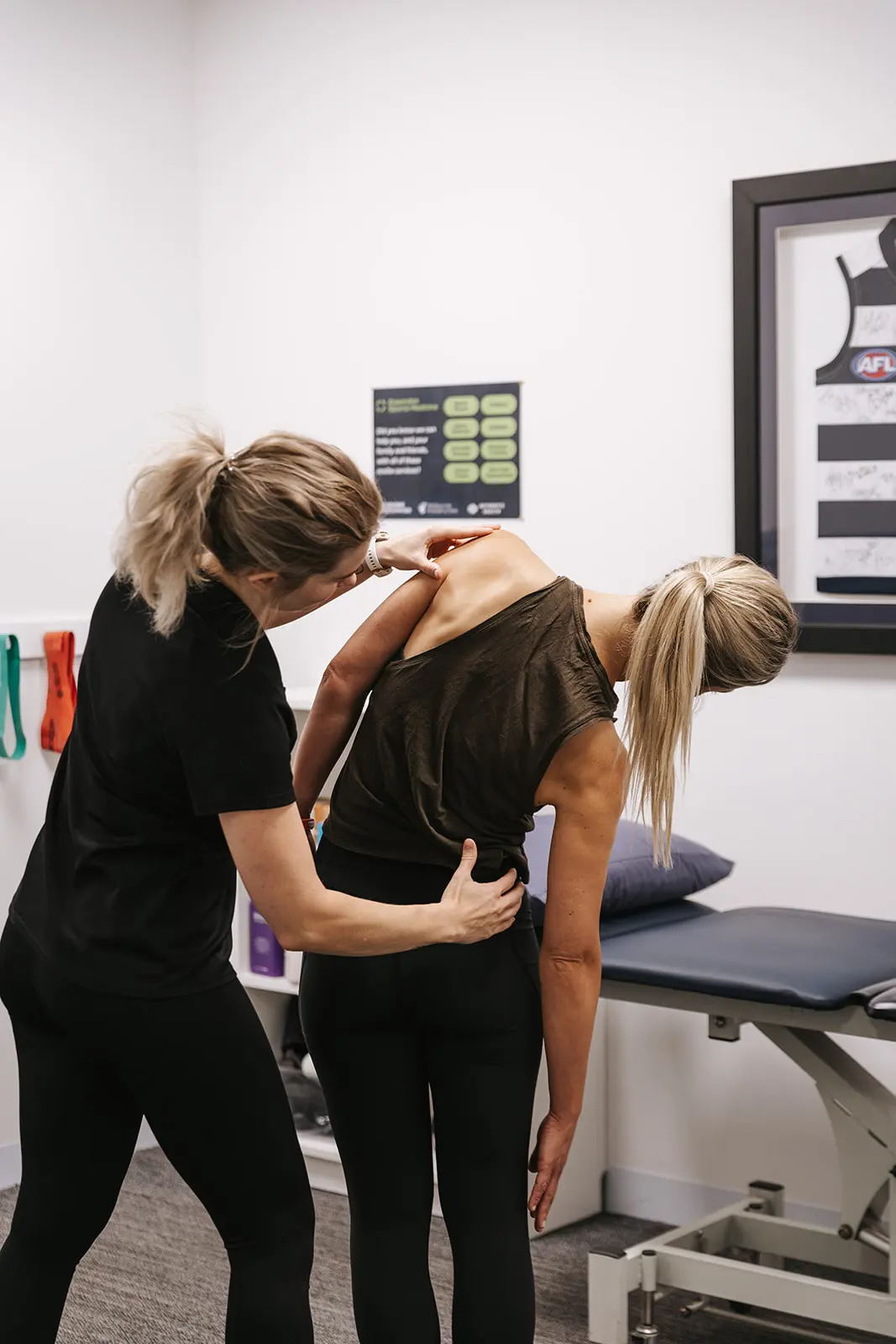
Sports physios are trained to analyse movement in detail
Once the injury history has been discussed, the physio will usually assess how the body moves during tasks that reproduce symptoms.
This may include walking, squatting, lunging, hopping, running, jumping or sport-specific movements.
Movement assessments often reveal compensations, stiffness, weakness or instability that contribute to pain.
For example:
-
A runner with knee pain may demonstrate poor hip control during single-leg tests
-
A tennis player with shoulder pain may have restricted back mobility
-
A football player with recurring hamstring strains may show reduced pelvic stability during sprint mechanics
-
A crossfit athlete with lower back pain may struggle to maintain core control during certain movements
These examples are common and provide valuable information that a scan cannot capture.
2 people may have identical MRI findings but move completely differently.
One person may compensate effectively and remain pain-free, while another may overload certain tissues due to poor movement patterns.
This is why sports physios place a strong emphasis on functional assessment rather than relying on imaging alone.
Book Online Now to Fix Your Body
Hands-on Testing Helps Identify Injured Structures via Sports Physio in Melbourne
Sports physios also use a wide range of physical exam techniques to narrow down a diagnosis.
This may include:
-
Testing joint movement
-
Assessing muscle strength
-
Checking flexibility
-
Pressing on painful structures
-
Testing ligament stability
-
Assessing nerve sensitivity
-
Comparing both sides
Different injuries tend to respond in predictable ways during testing. For example, certain ligament testings can strongly indicate an ACL injury, while specific shoulder tests may suggest irritation of the rotator cuff or labrum.
Tendon injuries often behave differently to muscle strains, joint irritation or nerve-related pain. By combining multiple assessment findings, sports physios can usually build a highly accurate clinical picture.
Importantly, diagnosis is not simply about naming a structure. It is also about understanding why the injury developed and what factors are present to have contributed to causing the issue.
These may include:
-
Inappropriate training load increases
-
Poor recovery
-
Reduced strength
-
Biomechanical issues
-
Previous injury
-
Suboptimal habits
For long-term recovery and injury prevention, is it essential to identify and address these potential factors.
Book Online Now to Fix Your Body
When Are Scans Needed?
Although sports physios can diagnose many injuries within the consultation room, there are situations where imaging is very important. Scans may be recommended if:
-
A fracture is suspected
-
An injury due to significant impact or high speed
-
Symptoms are worsening despite appropriate management
-
Surgery may be required
-
Signs of a serious health issue despite some symptoms being seemingly typical of a physical injury
-
Physical testing not matching up well with the discussion of history
-
Potentially multiple issues happening in the same region, creating an unclear pattern
Different scans provide different types of information
X-rays are useful for assessing bone injuries and some joint-related issues. MRI provides detailed imaging of soft tissues such as muscles, ligaments, tendons and cartilage. Ultrasound scans can be helpful for certain tendon and muscle injuries.
However, sports physios request imaging mainly when it is likely to change or influence management. Ordering unnecessary scans can create unnecessary confusion, increase healthcare costs and lead people to become overly concerned about findings that may be unimportant.
Clinical Experience Matters
One reason sports physios are often highly accurate without scans is experience
Over time, physios assess thousands of injuries across different sports and activity levels. They begin recognising common injury patterns, symptom behaviours and movement presentations.
An experienced sports physio in Melbourne can often identify the likely source of symptoms very early in the assessment process.
This does not mean guessing. It means combining knowledge, injury mechanisms, movement analysis and previous experience to reach the most likely diagnosis.
In many cases, the initial diagnosis is then further confirmed by how symptoms respond to treatment and management.
For example, if calf pain improves quickly with calf strengthening and load modification, then that response itself helps validate the original diagnosis.
Book Online Now to Fix Your Body
The Goal Is Better Recovery, Not Just a Label
Many patients understandably want a precise diagnosis immediately. However, the most important outcome isn’t necessarily a scan or complicated medical label.
The real goal is understanding:
-
What structures are involved
-
Why the injury occured
-
What movements or loads are aggravating the symptoms
-
What needs to improve for recovery
-
How to safely return to sport or exercise
A good sports physio assessment will focus on all these areas
Whether you are dealing with a running injury, gym-related pain, a weekend sports injury or recurring soreness that won’t settle, a thorough clinical assessment is often the best place to start.
Scans can certainly play an important role when warranted, but they are rarely the entire answer on their own. At the end of the day, successful injury management depends on understanding the person, not just the picture on a scan.
Book online today to feel great & move well again!
Super Simple with Instant Confirmation & No Login Required!
For consultation fees and more information, please visit our Fees and FAQs page or call us on 03 9498 0205.
Some types of consultations may require pre-payment or a deposit. 100% Money Back Guarantee (T&Cs apply).
Learn how our Melbourne Sports Physio team can help you?
At Melbourne Sports Physiotherapy our goal is to get you moving pain free as soon as possible.
But, we also want you to actually move better and live a healthier, more active and fulfilling life!
If your sports, fitness training or work has been wearing your body down, book in with one of our expert massage therapists so we can help you reduce your pain or stiffness.
If you are showing some signs of this condition or simply want help prevent this from happening in the future then book in with one of our highly experienced Remedial Massage Therapists today!
You can make an appointment by calling or booking online.