


August 2026
Jeroen Mattheus, Physiotherapist
ACL Injury Prevention Female Athletes: Why Women Tear Their ACL More Often Than Men—and How to Reduce the Risk
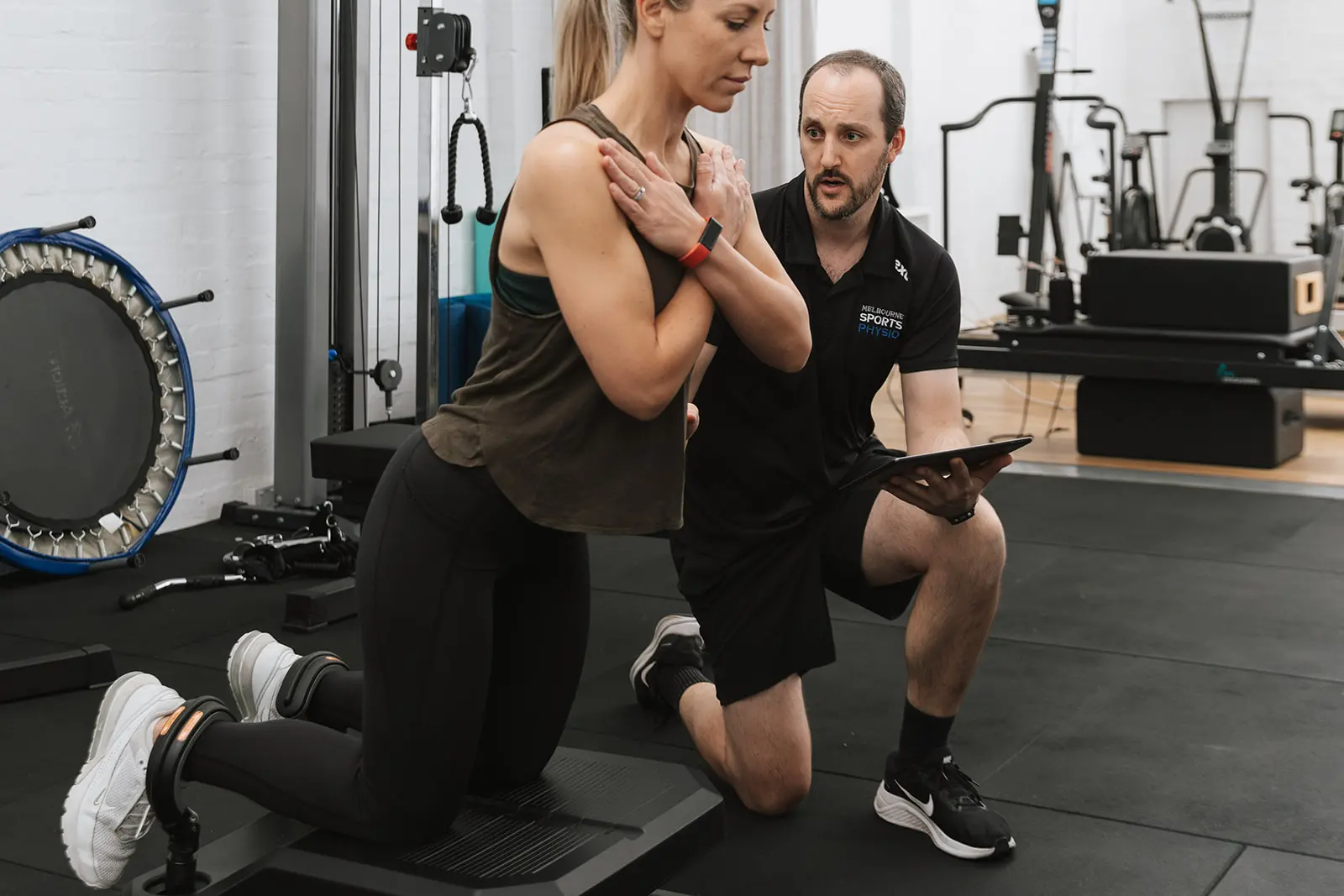
As participation in AFLW and community football, soccer, basketball, netball and other high-speed field and court sports continues to grow, so does awareness of anterior cruciate ligament (ACL) injuries in the knee in female athletes.
There is an important difference between male and female athletes as research consistently shows that female athletes participating in comparable sports have a substantially greater risk of ACL injury than males.
This blog will discuss the reasons for this and will show you how you can reduce the risk of an ACL tear.
Book Online Now to Fix Your Body
What Is the ACL—and Why Does It Matter?
The anterior cruciate ligament is one of the major ligaments inside your knee.
It helps control movement between the femur and tibia and contributes to knee stability, particularly during movements involving rapid changes of direction, pivoting, landing, and changes in speed.
These movements are everywhere in women's sport, but especially in netball, soccer, football and basketball. When the knee joint in general, and the ligaments and surrounding neuromuscular systems especially, needs to cope with forces more than it can tolerate, the ACL can rupture.
What our clients are saying about us
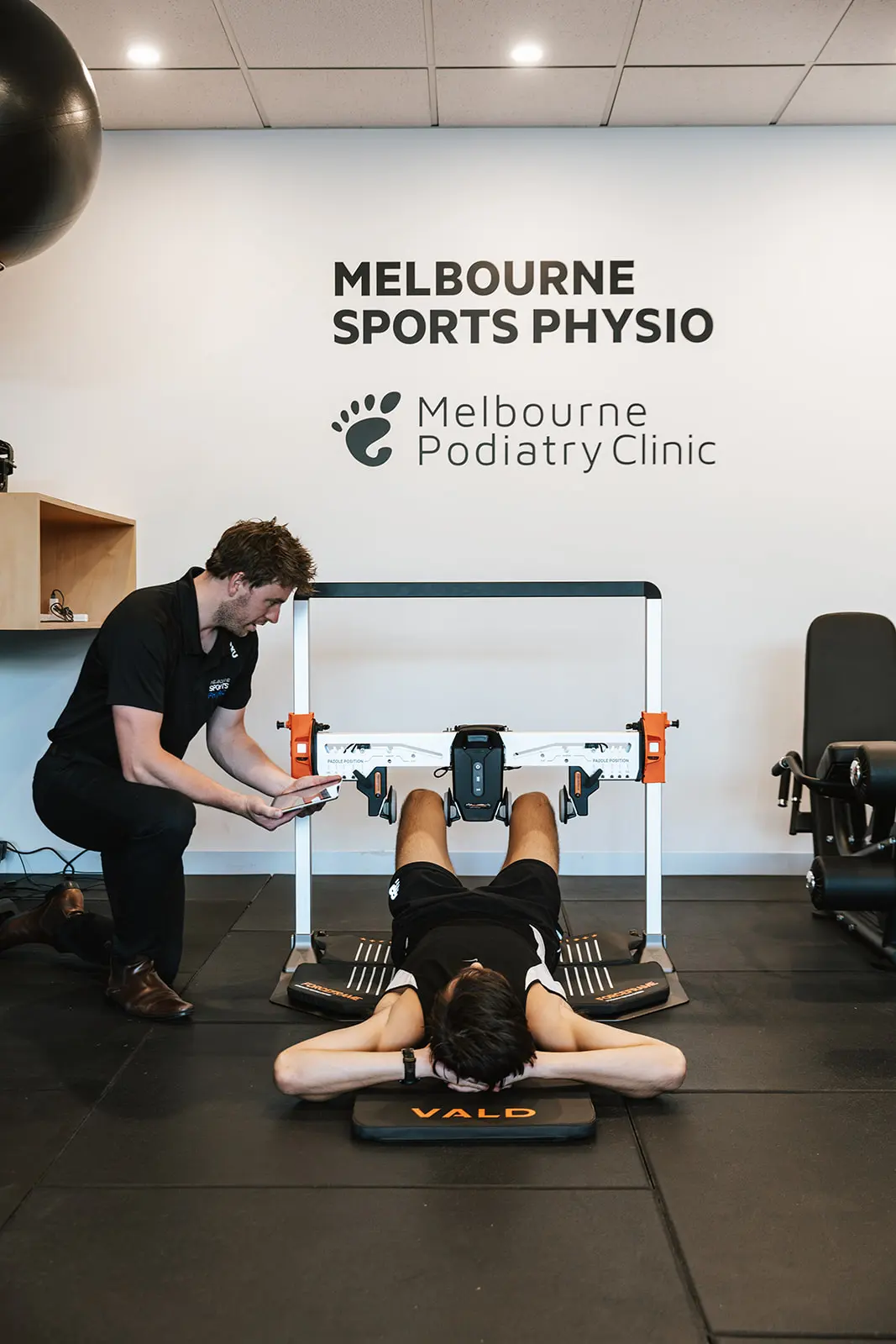
Why are ACL injuries more common in female athletes??
Studies across sports such as soccer and basketball have repeatedly reported higher ACL injury rates among female athletes compared with males participating in similar sports. There's, however, no single explanation. Research suggests ACL injury risk reflects an interaction between anatomy, biomechanics, strength, neuromuscular control, sporting exposure, training and potentially hormonal factors. Some of these factors cannot be changed, but other factors can be influenced.
-
Difference in anatomy
Female and male knees differ in several anatomical characteristics. Because women can have children, they have wider hips than men. This has an impact on pelvic structure and hip width and will influence the knee. ACL size, lower limb geometry, laxity of the joints and knee alignment have their impact as well.
These differences are not changeable, unfortunately.
-
Hormones and the menstrual cycle?
Hormones such as oestrogen and progesterone have been investigated because receptors for sex hormones exist within ligament tissue, and hormonal fluctuations may influence ligament properties.
Some research has suggested ACL injury risk may vary during different phases of the menstrual cycle.
However, the evidence remains inconsistent, and accurately determining menstrual-cycle phases across large groups of athletes is challenging. Hormonal factors may be one part of a much larger picture, but they don't replace the importance of strength, conditioning, training exposure and neuromuscular preparation.
Landing mechanics and knee control
Certain movement patterns have been investigated in relation to ACL loading and injury risk. One frequently discussed pattern involves the knee moving inward relative to the hip and foot during landing or cutting. A reason for this could be caused by weak hip control/strength or ankle instability affecting the knee indirectly.
It’s impossible to consciously think of these movement while practising sports, but that’s why these movements should be practiced to help these athletes develop movement strategies that become more automatic under sporting conditions.
Strength matters more than many athletes realise
ACL prevention isn't only about balance exercises. Strengthening the leg muscles such as the Quadriceps, Hamstrings, gluteals, calves and hip stabilisers is a major part of preparing an athlete's lower limbs to tolerate sporting loads. The hamstrings are particularly interesting because they can contribute to controlling forward movement of the tibia relative to the femur.
Deceleration training
A lot of exercises during training are designed to accelerate. Sprints, plyometric exercises, jumping… They all have the same function, and that is to get faster. Learning to stop is often forgotten, however. Having to change direction in the middle of a sprint demands a lot of energy from your body. Your body needs to be able to absorb the loads at those critical moments. If you cannot efficiently control those forces, the demand placed on the knee can increase.
That's why good prevention of heavy injuries should include deceleration training.
This might involve progressively teaching athletes to:
-
Slow down from increasing speeds
-
Control single-leg landings
-
Absorb force through multiple joints
-
Stop before changing direction
-
Progress from planned to reactive movements
The more you include these in your training, the less risk of injuring yourself on match day.
Book Online Now to Fix Your Body
Cutting and change of direction need to be trained too
The sports where ACL injuries most commonly occur aren’t played in straight lines. Soccer, AFL, netball and basketball are sports where the athletes need to make quick decisions and change direction in a fraction of a second. It’s vital to include these types of exercises in a rehab or prevention plan. The exercises done during rehab or training should be very similar to the actions done on the field. By gradually increasing the difficulty level of these exercises, you train the body to be able to handle unexpected changes of direction better.
Consistency is key - the earlier the better, in season and in life
Knowing an ACL prevention program works isn't enough. You as an athlete actually have to do it as well. Ideally, ACL prevention exercises should become part of regular training rather than being treated as a separate rehabilitation session. This will increase compliance and adherence.
Pre-season is an ideal time to build the foundations for ACL prevention. But prevention shouldn't disappear once round one arrives. In-season training can maintain these qualities. The exact training dose may change depending on match schedules, fatigue and other sporting demands, but consistency matters. ACL prevention should be viewed as a season-long process.
One of the most important opportunities for ACL injury prevention may occur before athletes reach senior competition. Adolescent athletes are learning movement skills while their bodies are changing rapidly.
Introducing age-appropriate strength, jumping, landing and movement training can help build physical literacy before sporting demands become even greater. Learning how to land, decelerate, jump and progressively develop strength are valuable athletic skills regardless of whether an ACL injury ever occurs.
Previous ACL Injuries are a big risk factor
Unfortunately, athletes who have already sustained an ACL injury face an increased risk of future ACL injury, either to the reconstructed knee or the opposite knee.
For these athletes, prevention becomes even more important. Returning to sport should involve much more than waiting a predetermined number of months after surgery. Research has also highlighted substantial rates of second ACL injury among young athletes returning to high-risk sports following ACL reconstruction.
This is why return-to-sport decisions need to consider time, physical testing, training exposure and sporting demands together.
Book Online Now to Fix Your Body
Can physiotherapy help if you haven't injured your ACL?
Absolutely. We would rather see you before so we can actually prevent that from ever happening. Prevention is key in this. Consider an assessment if you:
-
Play soccer, AFL, netball, basketball or another pivoting sport
-
Have previously injured your ACL
-
Have had another significant knee injury
-
Are returning to sport after a long break
-
Are entering a higher level of competition
-
Want to improve landing or change-of-direction ability
-
Don't currently perform structured strength training
-
Are a parent concerned about a young athlete's knee injury risk
Prevention can't guarantee that an ACL injury won't occur, but it will significantly reduce the risks of that ever happening. Exercises can be tailored to the athlete rather than relying on a generic online routine. Individualising the program helps make prevention relevant to the sport the athlete actually plays. The good thing is that a good program doesn't need to take over your entire training week. It can often be incorporated into existing training.
Strength training
Exercises might include:
-
Squats
-
Split squats
-
Lunges
-
Deadlift variations
-
Hamstring exercises
-
Calf raises
-
Single-leg strength work
The specific exercise matters less than progressively developing appropriate strength.
Jumping and landing
Athletes can progress from basic bilateral landings to:
-
Single-leg landings
-
Lateral jumps
-
Repeated jumps
-
Higher-speed plyometrics
-
Reactive landing tasks
Deceleration
This may progress from controlled stopping drills to decelerating from increasingly high running speeds.
Change of direction
Planned cutting can eventually progress to reactive drills that better resemble sporting situations.
Sport-specific conditioning
The final stages should resemble the demands of the athlete's sport.
A netballer, soccer player and AFL footballer don't experience exactly the same movement demands.
Their prevention programs shouldn't be identical either.
Book Online Now to Fix Your Body
The bottom line
Female athletes experience ACL injuries more frequently than men in many comparable pivoting and jumping sports. There are multiple reasons for that, such as anatomy and hormonal factors that we cannot influence. Other factors, like strength, neuromuscular control, landing, deceleration, change-of-direction ability and sporting exposure, also influence the risk of injury, and these are trainable.
At Melbourne Sports Physiotherapy, our physiotherapists can assess your strength, movement capacity and sporting demands before developing an individual program designed around the activities you actually need to perform, significantly reducing the risk of a severe injury.
For athletes returning after an ACL reconstruction, we can also provide you with progressive rehabilitation and objective testing to help guide the journey back to training and competition.
Book online today to feel great & move well again!
Super Simple with Instant Confirmation & No Login Required!
For consultation fees and more information, please visit our Fees and FAQs page or call us on 03 9498 0205.
Some types of consultations may require pre-payment or a deposit. 100% Money Back Guarantee (T&Cs apply).
Learn how our Melbourne Sports Physio team can help you?
At Melbourne Sports Physiotherapy our goal is to get you moving pain free as soon as possible.
But, we also want you to actually move better and live a healthier, more active and fulfilling life!
If your sports, fitness training or work has been wearing your body down, book in with one of our expert massage therapists so we can help you reduce your pain or stiffness.
If you are showing some signs of this condition or simply want help prevent this from happening in the future then book in with one of our highly experienced Remedial Massage Therapists today!
You can make an appointment by calling or booking online.