


Exercise Physiology In Essendon
What is an Accredited Exercise Physiologist?
An exercise physiologist is a university qualified allied health professional who prescribes exercise to treat and manage injury, illness and performance. AEPs are accredited by Exercise & Sports Science Australia (ESSA).
Exercise Physiology at Melbourne Sports Physiotherapy bridges the gap between rehabilitation and performance. Exercise Physiologists are experts in training and performance in the management of injury or health conditions.
Who is Exercise Physiology at Melbourne Sports Physiotherapy for?
-
Someone currently injured and still wanting to train and develop whilst injured.
-
Returning to sport from injury and wanting to return confident and ready to perform.
-
Managing training around health conditions such as diabetes or cardiovascular conditions.
-
Wanting greater insight into a holistic approach to your training and performance.
What does an exercise physiologist do?
An exercise physiologist is a university qualified allied health professional who prescribes exercise to treat and manage injury, illness and performance. AEPs are accredited by Exercise & Sports Science Australia (ESSA).
Here's an easy way to picture the difference. A personal trainer helps healthy people get fitter.
An exercise physiologist helps people whose body has a problem to solve, like an ACL return to sport, a shoulder contact injury, a health condition you are managing with sport/training, or a back that flares up every time they lift something heavy.
Every program starts with you.
Your exercise physiologist looks at what your body can currently achieve, your medical history, medications, and the level of performance or activity you want to return to.
An AEP will then create a weekly structure, training program and exercise selections that will have you on your way to performance
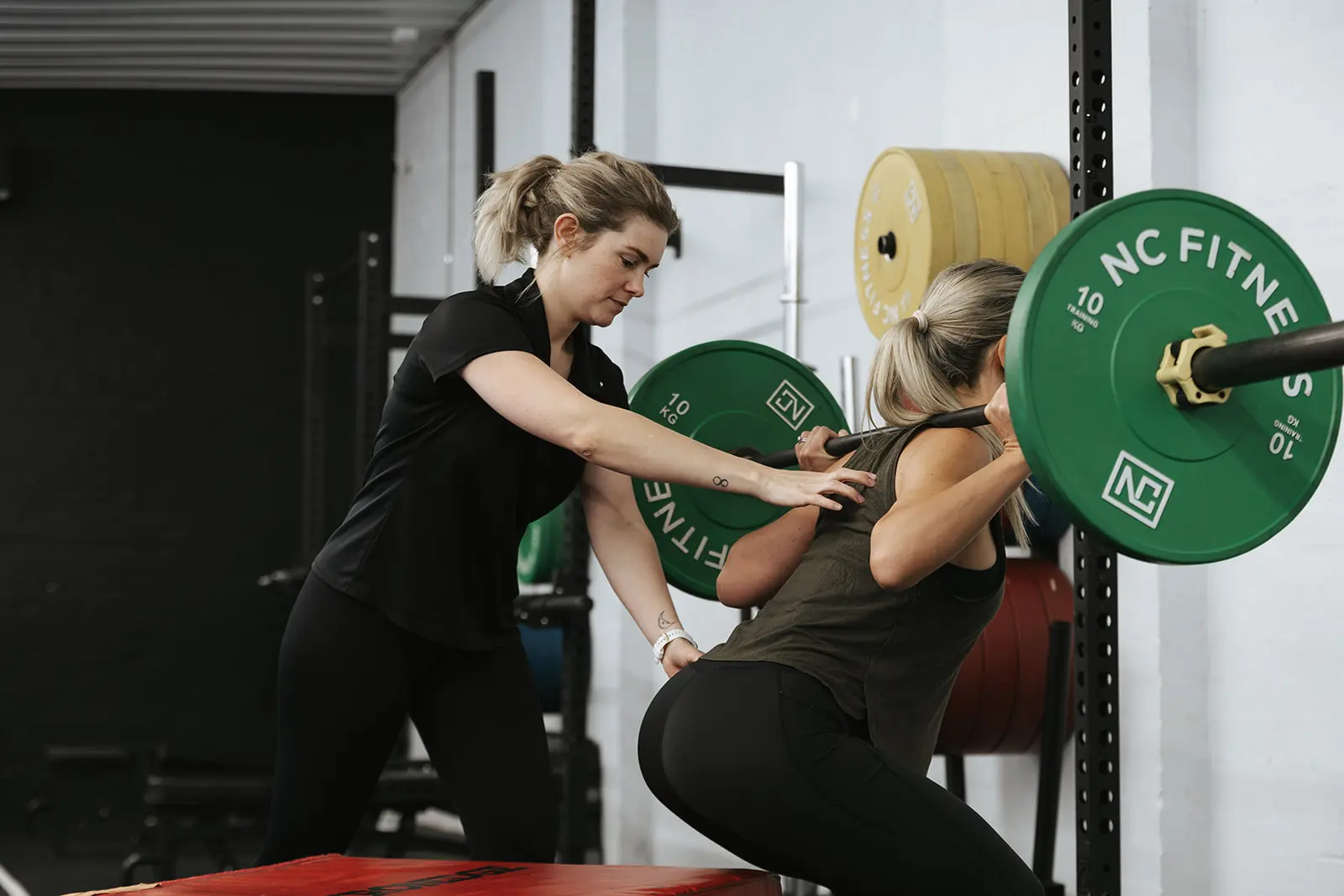
Sports rehab, strength and conditioning, and care after surgery
Return to sport
No pain doesn't mean ready to play. Strength, speed and power can remain in a deficit for months post an injury, even when the injury presents pain free you can still be at a high re-injury risk. An exercise physiologist will rebuild until your body can handle game-day loads. What does your sport ask of your body on its hardest day? That's what the program trains for.
Strength and conditioning
Not every athlete walks in injured.
Some want to be stronger, faster or harder to break before the season starts. An exercise physiologist can build training around your sport and your schedule. If a niggle shows up, there's clinical know-how on hand to adjust the plan straight away. Check out our Strength & Conditioning page for more information.
Rehab after surgery
Knee reconstructions, shoulder stabilisations, Achilles repairs and joint replacements all need a long rehab. During this rehab period, training does not stop! An exercise physiologist can create you a training program to improve your physical capacity outside of the current injury. This will only help you perform on return to your sport
VALD testing: measure, don't guess
VALD testing is a tool used at Melbourne Sports Physiotherapy in Essendon.
Vald Force plates and Nordboards and Force Frames used to measure peak force outputs, rate of force development and limb asymmetry.
Regular testing during rehab or training shows real progress, so decisions about returning to running, jumping, training or sport are based on numbers, not hope. Ask about VALD testing at your first visit to see if it suits your goals.
BOOK YOUR INITIAL EXERCISE PHYSIOLOGY SESSION
Exercise physiology for chronic conditions in Essendon
Long-term health conditions are very common. In 2022, one in two Australians (49.9%) had at least one chronic condition, according to the Australian Bureau of Statistics. An exercise physiologist will assist in a weekly training structure and training programs to help manage your health conditions with sport and training, such as the ones listed
-
type 2 diabetes and pre-diabetes
-
heart disease and high blood pressure
-
osteoarthritis in the knees and hips
-
osteoporosis and low bone density
-
unexplained chronic low back pain
-
healthy weight management
BOOK YOUR FIRST EXERCISE PHYSIOLOGY SESSION
What to expect
Your first session
-
A proper assessment. Your exercise physiologist asks about your injuries, health conditions, medicines, training history and goals.
-
Testing. Simple movement and strength tests show where you're starting from. VALD testing can be added where it helps.
-
A clear plan. You'll leave knowing what to do, how hard to push, how often to train, and how progress will be measured.
It helps to bring your referral if you have one, a list of your medicines, any scans or surgery notes, and clothes you can move in.
Group Exercise Physiology sessions
Once you know the basics, small group sessions led by an exercise physiologist are a great next step. Each person still follows their own program, with the same clinical oversight. Training alongside others also makes it easier to keep turning up. Ask the team about the current group timetable.

Exercise as treatment, not guesswork
An exercise physiologist helps close the gap between "healed" and "ready", and between "I should exercise" and "this is working".
With physios, strength coaches and VALD testing under one roof, MSP Essendon makes it easy to move from one stage of care to the next.
So think about the activity you'd love to do with more confidence a year from now.
Then book an assessment with MSP Essendon's exercise physiology team, or ask your physio or GP whether exercise physiology is the right next step for you.
BOOK EXERCISE PHYSIOLOGY SESSION NOW

Book Your Exercise Physiology Session in Essendon
For consultation fees and more information, please visit our Fees and FAQs page or call us on 03 9498 0205.
Some types of consultations may require pre-payment or a deposit. 100% Money Back Guarantee (T&Cs apply, see below).
Have a question?
Send us an email at [email protected] and we'll aim to get back to you the same business day.